
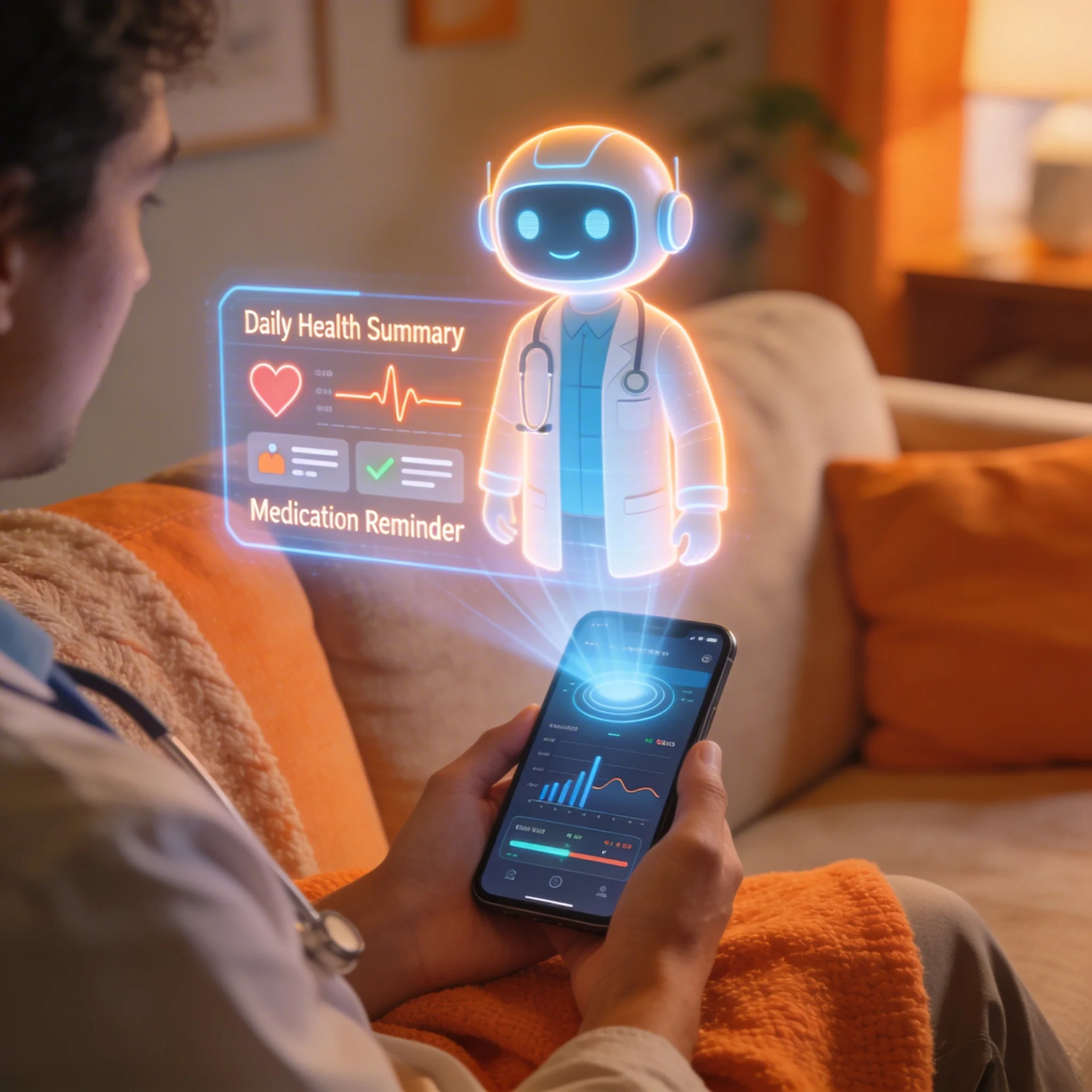
The 80% figure is striking enough to invite skepticism, and skepticism is warranted. When researchers and technology companies report that 80% of patients using AI health companions report better health outcomes, the figure needs to be unpacked carefully before it can be interpreted. It is simultaneously more nuanced and more genuine than it appears at first glance.
The figure comes primarily from self-report studies of patient experience—not from randomized controlled trials with clinical outcome endpoints. Patients reporting that they "feel their outcomes are better" is not the same as clinical evidence of improved outcomes. But it is also not nothing. Patient-reported outcomes are legitimate clinical endpoints in their own right for many conditions, and the consistent direction of effect across a wide range of studies—different populations, different conditions, different AI companion platforms—suggests something real is happening.
What Virtual Health Companions Are
Virtual health companions are AI systems designed for sustained, ongoing interaction with patients—not episodic encounters but continuous availability for health-related questions, medication reminders, symptom tracking, emotional support, and communication with care teams. They are distinct from symptom checkers (which are diagnostic tools), telemedicine platforms (which connect patients to clinicians), and wellness apps (which focus on healthy populations).
The defining characteristics are conversational depth, personalization over time, and availability. A virtual health companion is designed to know a specific patient—their condition, their medication regimen, their care team, their preferences, their concerns—and to be consistently available at 3 AM when anxiety about a new symptom makes sleep impossible, in the waiting room before an appointment when questions have accumulated, and on the Tuesday afternoon when a patient is deciding whether to refill a prescription they have been inconsistently taking.
These are not the moments that the healthcare system is currently designed to address efficiently. They are the moments that drive unnecessary emergency department visits, medication non-adherence, and the slow deterioration in chronic disease management that generates the most expensive healthcare utilization.
The Evidence Base: What Studies Actually Show
The research on virtual health companions is heterogeneous in quality and consistent in direction. A 2025 systematic review of 34 studies covering AI-assisted patient support across diabetes management, cardiovascular disease, mental health, and chronic pain identified statistically significant improvements in several measurable outcomes.
| Outcome Area | Studies | Key Finding | Measurement Method |
|---|---|---|---|
| Medication adherence | 12 studies | 11-23 percentage point improvement | Pharmacy refill data / electronic pill monitoring |
| Glycemic control (Type 2 diabetes) | 8 studies (5 significant) | 0.4-0.7 pp HbA1c reduction | Clinical lab results |
| Mental health | Multiple | High self-report improvement; smaller objective effects | Validated symptom scales (blinded) |
| ED utilization | 4 studies (3 significant) | Significant reduction in ED visits | Hospital records |
Medication adherence is the most consistently documented improvement. Across twelve studies in the review that used pharmacy refill data or electronic pill monitoring (not self-report) as the outcome measure, AI companion interventions were associated with adherence improvements of 11-23 percentage points over control groups. For medications where adherence is clinically critical—antihypertensives, insulin regimens, antiretrovirals—this magnitude of improvement has direct health consequences that can be quantified in clinical terms.
Glycemic control in type 2 diabetes was examined in eight studies, five of which found statistically significant HbA1c reductions in the AI companion cohort versus controls. The effect sizes were modest (0.4-0.7 percentage point HbA1c reduction on average) but clinically meaningful, consistent with the effect sizes seen from behavioral interventions and some medication adjustments in equivalent populations.
Mental health outcomes showed the most dramatic improvements in self-report measures and the most caution-warranting results in clinical outcome measures. Patients using AI companions for depression and anxiety support consistently reported high satisfaction and self-assessed symptom improvement. Objective outcome measures (validated symptom scales administered by blinded assessors) showed smaller effects, primarily in lower-severity presentations. The AI companion appears to be most effective in the support and accountability role—helping patients engage with treatment programs, reducing isolation, improving appointment adherence—rather than as a therapeutic intervention in its own right.
Emergency department utilization was examined in four studies of patients with chronic conditions (heart failure, COPD, diabetes). Three of the four found statistically significant reductions in ED visits in the AI companion cohort, driven primarily by earlier intervention on symptom escalation and better access to guidance about whether symptoms warranted emergency evaluation. The mechanism is plausible: a patient who can ask "is this breathlessness something I should go to the ER for?" at 11 PM and receive a calibrated, personalized response based on their condition and current status is less likely to either ignore a genuine warning sign or make an unnecessary high-cost visit out of uncertainty.
The Mechanisms: Why This Works
Understanding why virtual health companions improve outcomes for the patients they help is necessary for understanding who they help and under what conditions.
Availability at the moment of decision is the primary mechanism. Healthcare decisions—whether to take a medication, whether to seek care, whether to modify behavior in response to a symptom—happen continuously throughout the day, not during scheduled appointments. Clinical care is episodic; disease management is continuous. A companion that is available at the moment when a patient is deciding whether to skip their evening medication, whether a new symptom warrants a call to their care team, or whether the side effect they experienced is serious enough to stop treatment addresses the decision at the point where it occurs rather than retrospectively during the next appointment.
Non-judgmental engagement is particularly important for adherence and chronic disease management. Patients consistently report feeling judged when they disclose medication non-adherence, dietary lapses, or missed exercise to their clinicians—even when clinicians intend no judgment. This perception reduces disclosure, which reduces the clinical team's ability to identify and address the barriers to adherence. AI companions are consistently rated as non-judgmental by patients, and patients report being more forthcoming about non-adherence with AI companions than with human providers. This increased disclosure can only improve clinical management if it is communicated to the care team, which is why the best implementations include explicit care team notification pathways.
Consistent reinforcement of care plan elements addresses the gap between what is discussed in a clinical appointment and what a patient retains and acts on after leaving. Studies of patient recall from clinical appointments consistently find that patients remember less than 50% of the information provided during a visit. A companion that can reinforce key elements of the care plan—not through scripted reminders but through conversational engagement that responds to the patient's specific questions and concerns—provides a qualitatively different kind of support than a reminder notification.
The Critical Caveats
The 80% self-report figure should not be read as evidence that virtual health companions work for all patients with all conditions. The evidence base has meaningful gaps and the positive figures need to be understood in context.
Selection effects are substantial. Patients who engage consistently with virtual health companions are not representative of the overall patient population. They are, on average, more health-literate, more comfortable with technology, more motivated to engage with their health management, and more likely to have conditions that are well-served by behavioral self-management. Studies that report strong outcomes are studying the patients who succeeded in engaging—not the patients who declined to use the companion, used it briefly and stopped, or found it unhelpful.
Condition-specific effectiveness varies enormously. Conditions where self-management behavior drives outcomes—type 2 diabetes, hypertension, asthma, chronic pain, depression and anxiety—are far better served by AI companions than conditions where outcomes are determined by biological factors largely independent of patient behavior. The evidence is not generalizable across all conditions.
Integration with clinical care teams determines downstream value. A virtual health companion that improves a patient's symptom awareness and willingness to disclose non-adherence creates value only if that information is communicated to and acted on by the clinical team. Companions that operate in isolation from the medical record and the care team improve patient experience and self-report outcomes without necessarily improving the clinical decisions that determine health trajectories.
The Infrastructure for Scale
The adoption barriers for virtual health companions are not primarily in the AI capability—they are in the integration infrastructure, the clinical workflow connectivity, and the organizational change management required to embed a new touchpoint into existing care delivery models.
Health systems building virtual companion programs that achieve the outcomes in the research literature are doing several things that technology-first deployments miss: they are investing in clinical champion identification and training, designing explicit care team notification and escalation workflows, building the EHR integration that allows companion-generated data to inform clinical decisions, and actively managing patient onboarding and early-engagement support.
The technology is necessary but not sufficient. The 80% of patients who report better outcomes were served by deployments that treated the companion as a clinical care extender, not a standalone product. Building that kind of deployment requires the same discipline that any successful clinical technology implementation requires: clear workflows, trained staff, integrated data flows, and ongoing monitoring of whether the outcomes being achieved in pilot populations are being maintained at scale.
The figure is real. The path to achieving it is more complex than the headline suggests—and more achievable than the healthcare industry's historical caution about technology adoption might imply.