
On March 24, 2026, OpenAI announced it was "saying goodbye to the Sora app" — discontinuing both the mobile application and the API. Six months after a launch that saw 1 million downloads in five days and briefly topped the App Store charts, the most hyped AI video generator in history is dead.
The shutdown did not happen in isolation. Disney killed its planned $1 billion investment in OpenAI the same day. Deepfake controversies had plagued the platform for months. Downloads had cratered from 3.3 million per month to 1.1 million. In-app purchases totaled just $2.1 million — nowhere near enough to justify the compute costs for a company burning cash ahead of a potential IPO.
This is the story of what went wrong, what it means for the AI video industry, and where creators should go next.
 The AI video generation landscape is shifting rapidly after Sora's exit. Photo: Unsplash
The Rise and Fall of Sora
The Hype Cycle (February 2024 – September 2025)
Sora was first previewed in February 2024, generating enormous excitement with demo videos that showed unprecedented quality in text-to-video generation. The wait for public access lasted over a year — during which competitors shipped products while OpenAI refined and delayed.
When Sora finally launched as a standalone app in September 2025, it immediately went viral. The app combined a TikTok-style social feed with AI video generation, positioning itself as both a creative tool and a social media platform. One million downloads in less than five days. Top of the App Store. The hype appeared justified.
The Collapse (November 2025 – March 2026)
The problems emerged quickly and compounded:
Deepfake crisis. Users immediately began generating realistic videos of public figures — Michael Jackson, Martin Luther King Jr., Mister Rogers — doing outlandish and often offensive things. Family estates and the SAG-AFTRA actors' union protested. OpenAI scrambled to implement content filters, but the damage to public trust was done.
Content moderation failure. The social feed became flooded with what critics called "AI slop" — bizarre, disturbing, and low-quality content that drove away serious creators. Early adopters flooded the feed with unsettling AI clones of Sam Altman himself in disturbing scenarios, highlighting the fundamental difficulty of moderating AI-generated video at scale.
Compute economics. Video generation is extraordinarily compute-intensive. OpenAI's head of Sora publicly acknowledged limiting video generation due to limited chip supply. Every video generated consumed GPU resources that could have been allocated to ChatGPT's coding, reasoning, and enterprise features — products with far clearer revenue paths.
Declining engagement. Downloads peaked at 3.3 million in November 2025 and dropped to 1.1 million by February 2026. In-app revenue totaled just $2.1 million over the app's lifetime — a rounding error for a company valued at over $300 billion.
 Content creators who built workflows around Sora now face a forced migration. Photo: Unsplash
Why OpenAI Really Shut Down Sora
OpenAI's official statement focused on redirecting resources: "As we focus and compute demand grows, the Sora research team continues to focus on world simulation research to advance robotics that will help people solve real-world, physical tasks."
But the real reasons are more layered:
1. IPO Preparation
OpenAI is preparing for a potential IPO. Sora was a cash-burning consumer product with declining engagement, deepfake liabilities, and unclear monetization. Shutting it down simplifies the business narrative: OpenAI is an enterprise AI company, not a social media company.
2. Compute Reallocation
GPU hours are OpenAI's scarcest resource. Every video generated by Sora consumed compute that could power ChatGPT Enterprise subscriptions, API calls, or the reasoning models that enterprise customers pay premium prices for. The economics were unambiguous: enterprise AI generates far more revenue per GPU hour than consumer video generation.
3. The Disney Deal Collapse
The Disney partnership — which would have let users generate videos featuring 200+ Disney, Marvel, Pixar, and Star Wars characters — was announced just three months before the shutdown. When the deepfake and content moderation issues became untenable, Disney pulled out. Without the Disney deal, Sora lost its most compelling differentiator for consumer adoption.
4. Regulatory and Legal Risk
Generative AI video is a regulatory target. The EU's AI Act, pending US legislation, and ongoing lawsuits about AI-generated content all create legal risk. For a company preparing for public markets, a product that generates deepfake headlines is a liability, not an asset.
 Sora's shutdown signals a strategic pivot, not the end of AI video. Photo: Unsplash
What This Means for the Industry
The Social Video Experiment Is Over (For Now)
Sora's most ambitious bet was not the video generation model — it was the social feed. OpenAI tried to build a TikTok for AI video, combining generation and distribution in a single app. That experiment failed definitively. The content moderation challenges of AI-generated video at social media scale are unsolved.
This does not mean AI video generation is dead. It means the consumer social media model for AI video is premature. The technology works; the content moderation, trust, and safety infrastructure does not exist yet.
API-First Video Generation Wins
The shutdown of both the app and the API sends a clear signal: OpenAI is exiting AI video generation entirely, at least for now. This creates a vacuum that API-first competitors — Google Veo, Runway, Kling — are positioned to fill.
For developers and platforms building AI video features into their own products, the lesson is clear: do not build on a single provider's API. The companies that had Sora API integrations now face forced migrations. Multi-provider strategies and abstraction layers are not over-engineering — they are risk management.
Content Creators Must Diversify
Creators who invested months building workflows, audiences, and creative practices around Sora are left stranded. Their generated content remains accessible for download temporarily, but the tool, the community, and the creative pipeline are gone.
This highlights a fundamental risk of building creative practices on closed-source AI platforms. When the platform shuts down, there is no fallback. The creator's work, workflow knowledge, and community connections are lost.
The growing advocacy for local-first and open-source AI video solutions is a direct response to this risk. Open-source models like Wan 2.6 provide a foundation that cannot be unilaterally shut down.
Hollywood Breathes — But Not For Long
The entertainment industry reacted to Sora's shutdown with a mix of relief and concern. Relief because Sora's deepfake capabilities threatened actors' likenesses and creative professionals' livelihoods. Concern because the underlying technology continues to advance rapidly through competitors — the shutdown of one product does not slow the technology's trajectory.
 Multiple competitors are ready to fill the vacuum Sora left behind. Photo: Unsplash
The Best Sora Alternatives in 2026
The AI video generation market did not stop with Sora — it accelerated. Here are the leading alternatives, ranked by capability and use case.
Tier 1: Production-Grade Alternatives
Google Veo 3.1 — Best Overall
Google's Veo 3.1 is the most widely cited replacement for Sora in professional contexts. It is the only video generation model offering native 4K output, with synchronized audio generation and strong physics simulation.
| Feature | Details |
|---|---|
| Resolution | Up to 4K (Ultra subscribers), 1080p (Pro), 720p (Plus) |
| Audio | Native synchronized audio (dialogue, SFX, ambient) |
| Length | Up to 8 seconds per generation |
| Pricing | AI Plus $7.99/mo, Pro $19.99/mo, Ultra $249.99/mo |
| API | $0.15/sec (Fast), $0.40/sec (Standard) via Gemini API |
| Strengths | 4K output, audio generation, physics realism, prompt adherence |
Best for: Professional video production, commercial content, high-resolution output requirements.
Runway Gen-4 — Best for Filmmakers
Runway holds the highest Elo rating among AI video generation models globally. Gen-4's breakthrough is character consistency — maintaining the same character appearance, clothing, and features across multiple scenes using a single reference image.
| Feature | Details |
|---|---|
| Resolution | Up to 4K with upscaling |
| Character Consistency | Single reference image maintains identity across scenes |
| Length | 10 seconds per generation (~30 sec processing) |
| Pricing | Starting at $12/month |
| Strengths | Character consistency, physics simulation, professional editing tools (Aleph) |
| Ecosystem | Aleph editor for post-generation editing, prop addition, style transfer |
Best for: Narrative filmmaking, character-driven content, professional post-production workflows.
Seedance 2.0 (ByteDance) — Best Motion Quality
ByteDance's Seedance 2.0 excels at what most AI video still struggles with: natural motion and temporal consistency. Characters move realistically, camera work feels intentional, and physics behave plausibly.
| Feature | Details |
|---|---|
| Resolution | Native 2K |
| Audio | Audio-video joint generation with lip-sync in 8+ languages |
| Input | Up to 9 images, 3 videos, 3 audio files combined |
| Length | Up to 15 seconds per generation |
| Strengths | Motion dynamics, temporal consistency, multi-modal input |
| Upcoming | Seedance 2.5 targeting 4K and near-real-time (mid-2026) |
Best for: Dynamic content, motion-heavy scenes, multi-language content production.
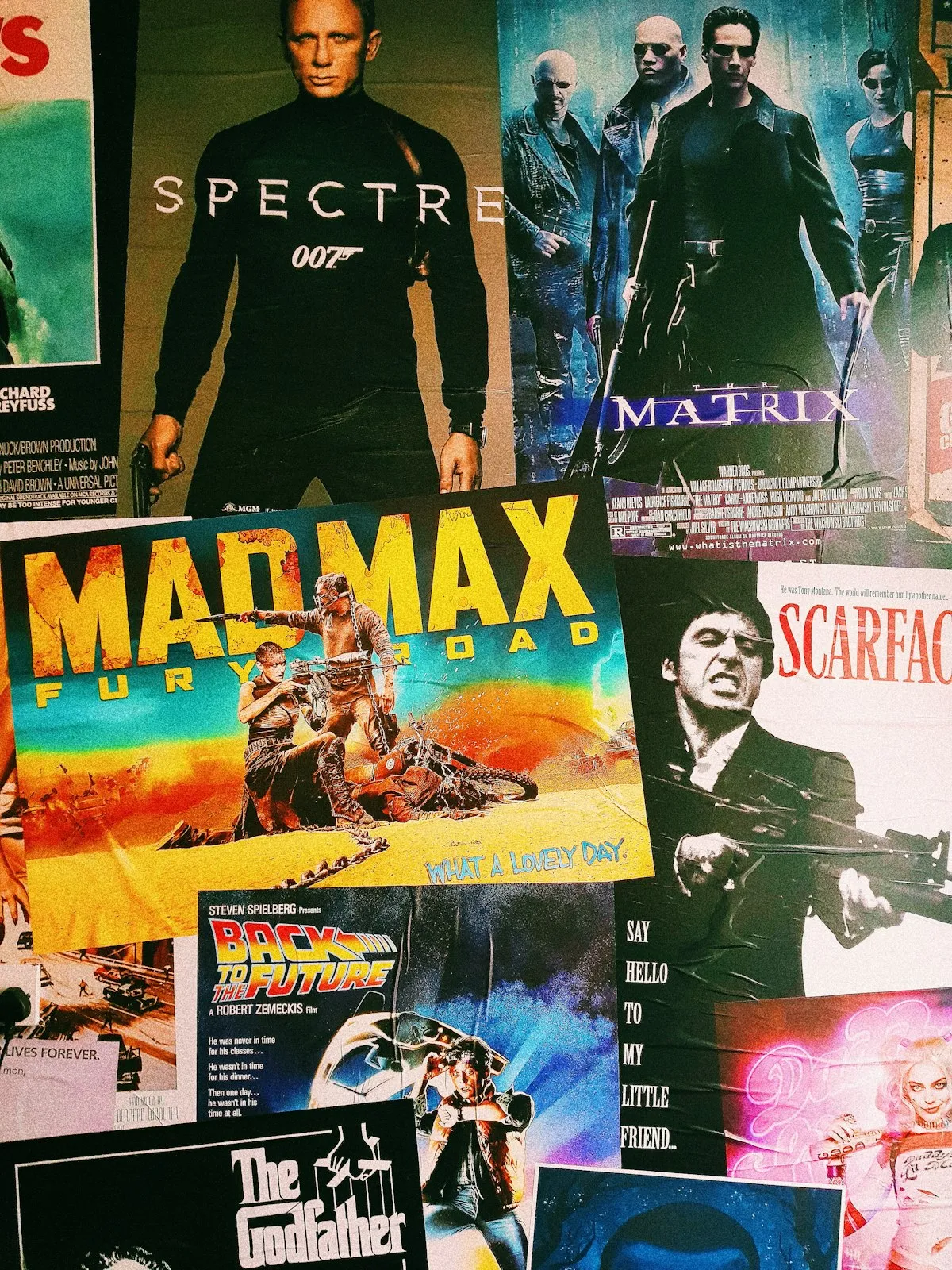 The tools for AI video creation are more diverse and capable than ever. Photo: Unsplash
Tier 2: Accessible Alternatives
Kling 3.0 — Best for Getting Started
Kling is the most accessible Sora alternative — no waitlist, free tier available, and the strongest community ecosystem. It may not match the peak quality of Veo 3.1 or Runway Gen-4, but its accessibility makes it the practical choice for most creators.
| Feature | Details |
|---|---|
| Resolution | Up to native 4K (Kling 3.0) |
| Audio | Multilingual audio support, synchronized generation (Kling 2.6+) |
| Free Tier | 66 credits/day, 720p, watermarked |
| Pricing | Standard $6.99/mo, Pro $29.99/mo, Premier $92/mo |
| Strengths | Accessibility, no waitlist, Elements feature for character consistency |
| Storyboard | Kling 3.0 Omni storyboard tool for shot-by-shot control |
Best for: Creators starting with AI video, social media content, rapid prototyping.
Luma Dream Machine (Ray 3.14) — Best Realism
Luma's Ray 3 is the world's first reasoning video model — it plans and creates rather than just generating. The simulation of lighting, material behavior, and atmospheric effects (rain, fog, fire, ocean waves) is consistently among the best available.
| Feature | Details |
|---|---|
| Resolution | Native 1080p, up to 4K with Hi-Fi Diffusion |
| HDR | World's first native HDR video generation |
| Length | Up to 120 seconds at 720p-4K |
| Draft Mode | Rapid iteration mode for exploring ideas |
| Strengths | Physical realism, HDR, atmospheric effects, Draft→Hi-Fi workflow |
| Advanced | Ray3 Modify for AI-enhanced real actor performances |
Best for: Realistic scenes, nature/atmospheric content, HDR production, hybrid AI-live action.
Tier 3: Open Source
Wan 2.6 (Alibaba Cloud) — Best Open-Source Option
For creators concerned about platform dependency after Sora's shutdown, Wan 2.6 represents the open-source alternative. Built on 14 billion parameters trained on 1.5 billion videos, it offers multi-shot storytelling and phoneme-level lip synchronization.
| Feature | Details |
|---|---|
| Resolution | Up to 1080p at 24fps |
| Length | Up to 15 seconds |
| Architecture | Mixture-of-Experts, 14B parameters |
| Character Consistency | Up to 150 reference frames |
| Audio | Native lip-sync generation |
| Access | API via Alibaba Cloud, or self-hosted |
Best for: Developers building custom video pipelines, teams wanting platform independence, self-hosted workflows.
Comparison Matrix: Sora Alternatives at a Glance
| Tool | Max Resolution | Audio | Free Tier | Best For | Price From |
|---|---|---|---|---|---|
| Google Veo 3.1 | 4K | Native | Limited | Professional production | $7.99/mo |
| Runway Gen-4 | 4K (upscaled) | Via Aleph | Trial | Filmmaking, narrative | $12/mo |
| Seedance 2.0 | 2K | Native joint | Yes | Motion-heavy content | Free / API |
| Kling 3.0 | 4K | Native | 66 credits/day | Getting started | Free / $6.99/mo |
| Luma Ray 3.14 | 4K HDR | Limited | Trial | Realism, atmosphere | Subscription |
| Wan 2.6 | 1080p | Lip-sync | Open-source | Self-hosted, custom | API / Free |
What Creators Should Do Now
Immediate Actions
- Download your Sora content. If you have generated videos on Sora, download them before the app goes offline completely.
- Do not panic-migrate. Test 2-3 alternatives with your actual use cases before committing to a new platform.
- Document your prompts. The prompting techniques you developed for Sora translate to other platforms with minor adjustments.
Strategic Shifts
- Diversify your tools. Never build your entire creative workflow on a single AI platform. Use at least two providers for critical capabilities.
- Consider open-source. Wan 2.6 and other open models provide a foundation that cannot be unilaterally discontinued. Even if you use commercial tools for daily work, understanding open-source options provides a safety net.
- Build portable workflows. Store your creative assets (reference images, style guides, prompt libraries) independently of any platform. Your creative knowledge should survive any single tool's shutdown.
- Watch the API market. If you are building AI video into a product, abstract your video generation behind an interface that can swap providers. The Sora API shutdown proved that provider lock-in is a real business risk.
 AI video generation is not dead — it is diversifying. The post-Sora landscape offers more choice than ever. Photo: Unsplash
The Bigger Picture
Sora's shutdown is not the end of AI video generation. It is the end of one company's attempt to build a consumer social platform around it. The technology continues to advance rapidly through multiple competitors — several of which now exceed Sora's peak capabilities.
The real lesson is about platform risk. Creators who built on Sora learned the same lesson that creators on Vine, Google+, and countless other platforms learned before them: closed platforms can disappear overnight. The difference with AI tools is that the creative capabilities are not locked to the platform — they are available across a growing ecosystem of alternatives.
For the AI video industry, Sora's exit clears the market for competitors who have been building steadily while OpenAI generated headlines. Google, Runway, ByteDance, Luma, Kling, and the open-source community now have the field. The best AI video tools of 2026 are not coming from the company that killed Sora — they are already here, from the companies that kept building while Sora burned.
All images in this article are sourced from Unsplash under the Unsplash License (free for commercial and non-commercial use).
References
- OpenAI will shut down Sora video app; Disney drops plans for $1 billion investment — Variety
- OpenAI is shutting down its Sora video app just months after launch — CNN Business
- OpenAI pulls the plug on Sora, the viral AI video app that sparked deepfake concerns — NPR
- OpenAI ends Sora, ChatGPT shopping, prepares for IPO — Axios
- OpenAI to abruptly close Sora video app following backlash over deepfakes and AI slop — Euronews
- OpenAI shuts down Sora video app amid deepfake concerns — The Hill
- Why did OpenAI's Sora crash and burn? — Cybernews
- Sora is shutting down: Best Sora alternatives in 2026 — VEED
- Goodbye Sora: Top 5 best Sora alternatives for making AI videos in 2026 — WaveSpeedAI
- Veo 3 — Google DeepMind
- Introducing Runway Gen-4 — Runway Research
- Seedance 2.0 — ByteDance
- Luma AI Ray3 — Dream Machine
- Kling AI Creative Studio