
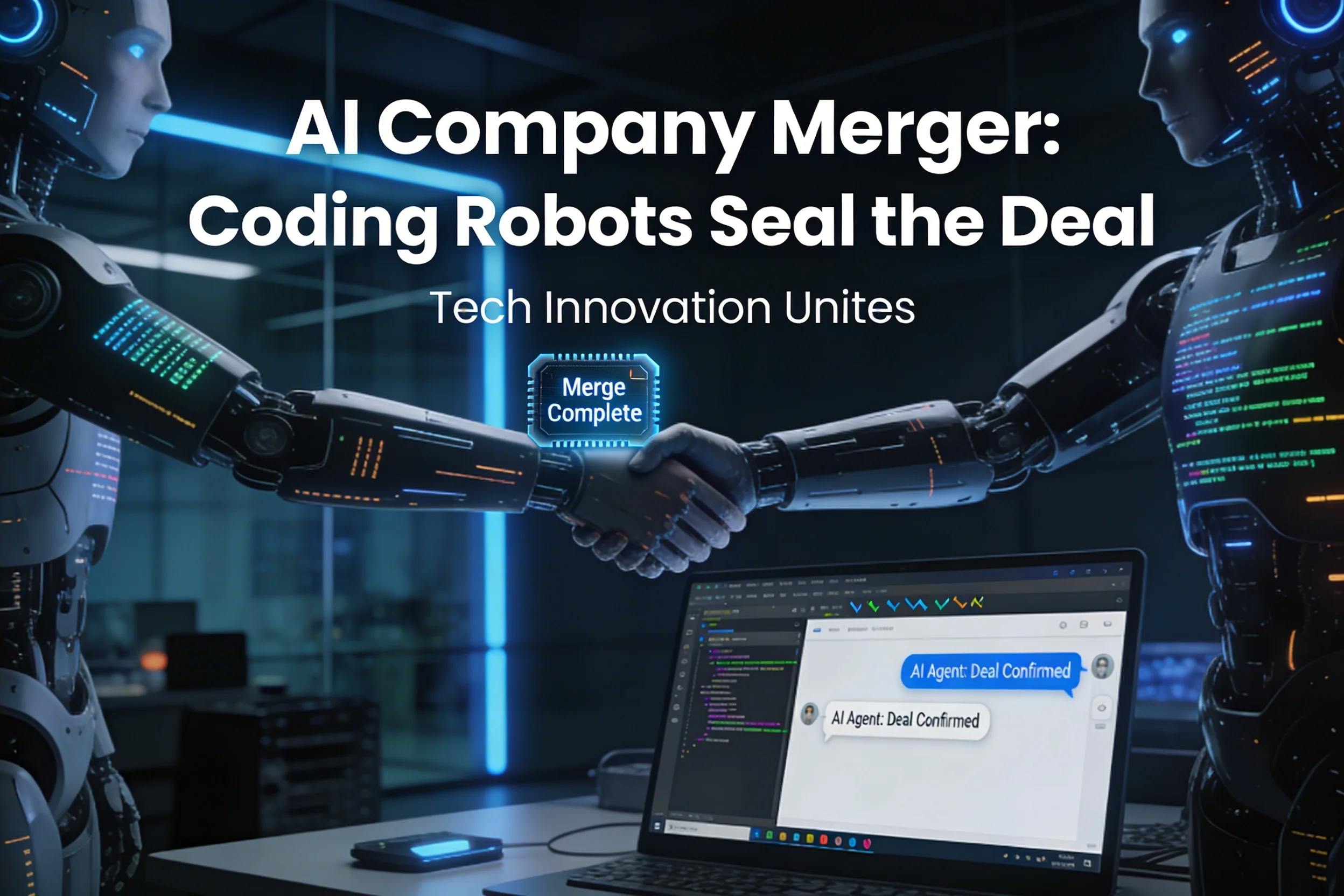
When Cognition — the company behind Devin, the AI software engineer that captured the industry's imagination in early 2024 — acquired Codeium's Windsurf IDE, most coverage focused on the price tag and the consolidation narrative. Both framings miss the more interesting strategic signal embedded in the deal.
The acquisition came at the end of a dramatic sequence: OpenAI had originally agreed to acquire Windsurf for approximately $3 billion, but that deal collapsed in July 2025 after Microsoft raised objections over IP exclusivity. Google then executed a $2.4 billion acquihire of Windsurf's CEO, co-founder, and key researchers, plus a nonexclusive technology license. Cognition subsequently acquired Windsurf's remaining assets — the product, brand, IP, and remaining team — for approximately $250 million, then raised $400 million at a $10.2 billion valuation post-acquisition. Understanding this sequence matters: Cognition bought a product that had already lost its founding leadership to Google, not a fully intact company.
Cognition was founded on the premise that the right architecture for AI-assisted software development is an autonomous agent that operates on your codebase the way a senior engineer would: reading context, planning changes, executing across multiple files, running tests, iterating on failures. Windsurf was built on a different premise: that the right architecture is a deeply integrated coding environment where AI assistance is woven into every keystroke, autocomplete, and refactor.
The acquisition means Cognition is now betting on both.
Devin's Trajectory and Its Limitations
Devin's initial demo was striking precisely because it showed an agent capable of tasks that felt qualitatively different from previous AI coding tools: cloning a repository, understanding the codebase structure, writing a feature implementation, debugging a test failure, and submitting a pull request — all without human intervention at each step.
The commercial reality, as engineering teams who worked with Devin through 2024 and 2025 discovered, was more nuanced. Devin performs exceptionally well on well-scoped, isolated tasks with clear acceptance criteria. It struggles with tasks that require deep understanding of implicit organizational context — the architectural decisions that are not documented anywhere, the quirks of a legacy service that everyone on the team knows by feel, the conventions that emerged from eighteen months of code review and were never written down.
These limitations are not unique to Devin. They are intrinsic to any agent that operates externally to a developer's working environment. When you use Devin, you are handing off a task to a system that must reconstruct context from scratch, reading files and commit history without the benefit of having been present for the decisions that shaped them.
This is where Windsurf's architecture offers something complementary.
What Windsurf Brings to the Table
Windsurf's core innovation was not AI autocomplete — GitHub Copilot had that. It was the Cascade feature: an awareness of developer context that accumulated over a working session and could be applied to increasingly sophisticated editing and refactoring operations. The IDE tracked not just what code existed, but what the developer was trying to accomplish, which files they had recently visited, and how changes in one part of the codebase related to others.
That contextual richness is exactly what Devin lacks when it picks up a task cold. An IDE that has been running while a developer works has access to implicit context that no file-reading agent can reconstruct.
The Combined Architecture
The strategic thesis of the combined Cognition + Windsurf entity seems to be: agents should be able to operate both autonomously (Devin's original mode) and in deeply integrated collaboration with a developer's active working environment (Windsurf's mode). Depending on the task and the developer's preference for oversight, the system shifts between these modes.
This is architecturally sensible, but it sets up an interesting competitive dynamic with Microsoft (GitHub Copilot + VS Code), Cursor, and the rest of the AI IDE space. Cognition is now positioned not just as an autonomous coding agent but as a full development environment competitor.
The Broader Question: Where Should AI Agents Live?
The Cognition/Windsurf acquisition crystallizes a question that is playing out across the AI tools landscape: what is the right host environment for an AI agent?
Three models have emerged:
Editor-integrated agents (Cursor, Windsurf, GitHub Copilot in agent mode) live inside the IDE. They have rich access to your working context and can intervene at any point in the development process, but they are constrained by the editor's UI and typically require the developer to remain engaged.
Cloud-based autonomous agents (Devin, various SWE-bench-optimized systems) run on their own infrastructure, receiving task specifications and returning completed work. They are better suited to async, batch-style workflows but start with a cold context problem.
Desktop-native agents take a different architectural approach entirely. Rather than living inside a specific application or on a remote server, they run locally on the developer's machine with access to all applications, files, and system state — not just what an editor plugin can see.
This third model is where Neumar operates. Rather than being a plugin for a specific IDE or a cloud service that receives task handoffs, Neumar runs as a desktop application alongside your existing tools. It can orchestrate work across your editor, terminal, browser, and other applications simultaneously, with persistent memory that accumulates context over time rather than reconstructing it from scratch for each task.
The distinction matters for the classes of work that are most valuable to automate. Truly complex software engineering tasks — the ones that span multiple systems, require coordination across tools, and benefit from organizational memory — are better served by an agent with broad, persistent access to the developer's environment than by an agent that is tightly scoped to a single application.
Implications for the AI Coding Tools Market
The Cognition/Windsurf deal will likely accelerate consolidation in the AI IDE space. Building and maintaining a full-featured code editor is expensive — Cursor has hundreds of millions in ARR to fund that effort; smaller players face real pressure. Expect more acquisitions as well-capitalized agent companies look to acquire the distribution and context advantages that come with a developer's daily driver editor.
For enterprise buyers, the consolidation is probably welcome. Managing multiple AI coding tools with different authentication systems, billing structures, and capability models creates operational overhead. A single environment that handles both synchronous pair-programming-style assistance and asynchronous autonomous task execution is a more compelling enterprise proposition.
For developers, the key question is not which tool has the best benchmark score on SWE-bench. It is which architecture fits your actual workflow. If you spend most of your time in deep coding sessions where you want contextual suggestions at your fingertips, an IDE-native agent is the right fit. If you want to queue up longer-horizon tasks and review completed work, an autonomous agent model makes more sense. If your work spans multiple tools and you value continuity of context across sessions, a desktop-native approach is worth evaluating.
The next eighteen months will likely determine which architecture wins the developer workflow — or whether the answer is that all three coexist for different use cases.
Windsurf Deal Timeline
| Date | Event | Value |
|---|---|---|
| Early 2025 | OpenAI agrees to acquire Windsurf | ~$3 billion |
| July 11, 2025 | OpenAI deal collapses (Microsoft IP objections) | — |
| July 2025 | Google acquihires Windsurf CEO, co-founder, key researchers | $2.4 billion |
| July 14, 2025 | Cognition acquires remaining Windsurf assets | ~$250 million |
| Post-acquisition | Cognition raises new funding round | $400M at $10.2B valuation |
AI Agent Architecture Models
| Architecture | Example | Strengths | Weaknesses |
|---|---|---|---|
| Editor-integrated | Cursor, Windsurf, GitHub Copilot | Rich working context, real-time assistance | Constrained by editor UI, requires developer engagement |
| Cloud autonomous | Devin, SWE-bench systems | Async batch workflows, no local setup | Cold context problem, no implicit organizational knowledge |
| Desktop-native | Neumar | Broad system access, persistent memory, cross-app orchestration | Single-machine scope |
References
- TechCrunch, "Cognition, maker of AI coding agent Devin, acquires Windsurf" (July 14, 2025)
- Cognition blog post on the acquisition
- Bloomberg, "OpenAI's $3 billion deal to buy Windsurf falls apart" (July 11, 2025)
- TechCrunch, "Windsurf's CEO goes to Google, OpenAI's acquisition falls apart" (July 11, 2025)