

Gartner predicts 40% of enterprise applications will integrate task-specific AI agents by the end of 2026 — up from less than 5% in 2025. The global AI agents market is projected to exceed $10.9 billion this year and reach $52.6 billion by 2030 at a CAGR of 46.3%. By March 2026, 72% of large enterprises are operating agent systems beyond pilot programs.
But there is a bottleneck between an agent that works in a demo and one that runs in production: the sandbox. Every agentic AI system that executes code, browses the web, or interacts with file systems needs an isolated environment where mistakes are contained and malicious inputs are neutralized. The sandbox — once an afterthought — has become the decisive enabler of agentic AI at scale.
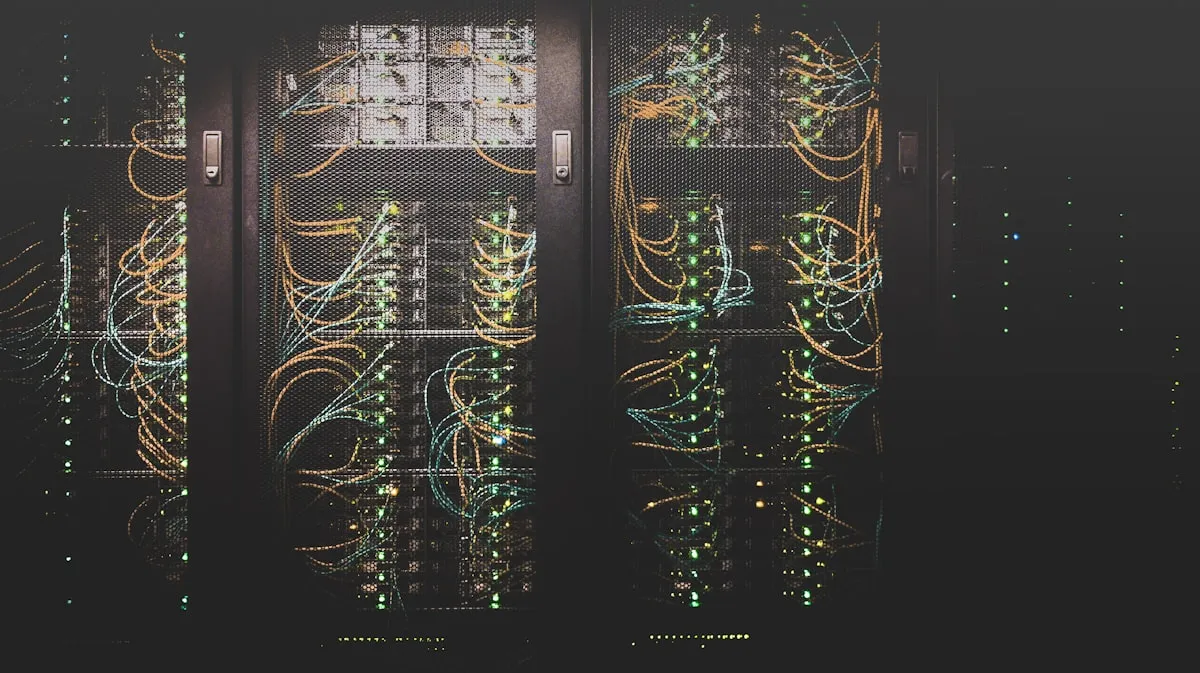 Sandbox infrastructure is the load-bearing wall between experimental agents and production systems. Photo: Unsplash
Why Sandboxes Are Critical for Agentic AI
Traditional software runs deterministic code in controlled environments. Agentic AI generates and executes code at runtime, makes autonomous decisions, and interacts with external systems — all probabilistically. When Anthropic's Claude Computer Use encountered a test webpage with hidden instructions, it downloaded and executed a malicious binary — socially engineered through prompt injection embedded in web content.
Sandboxes enforce five principles essential for production agent deployment:
| Principle | What It Means | Why Agents Need It |
|---|---|---|
| Blast radius containment | Damage stays inside the sandbox | Errors compound over multi-step tasks |
| Network isolation | Default no-network; allowlist endpoints | Prevents data exfiltration from prompt injection |
| Filesystem scoping | Agents see only mounted directories | Blocks access to credentials and system files |
| Resource limits | CPU, memory, time constraints | Prevents runaway agent loops |
| Reproducibility | Snapshot and replay capability | Enables auditing and compliance |
The OpenClaw Ecosystem: Growth, Vulnerabilities, and Forks
OpenClaw: 250K Stars, 21K Exposed Instances
OpenClaw, the open-source personal AI agent by Peter Steinberger, became the fastest-growing open-source project in history — surpassing 250,000 GitHub stars and 47,700 forks. It operates as a messaging-first agent that lives inside WhatsApp, Telegram, Slack, and Discord, executing tasks autonomously via a heartbeat daemon.
The architecture is four tiers: messaging channels, a central Node.js gateway on 127.0.0.1:18789, an LLM brain (Claude, GPT, Gemini, or Ollama), and 100+ preconfigured skills. The design prioritized developer experience — everything runs in a single Node.js process with shared memory and application-level security.
The consequences were severe:
- 21,000+ instances exposed on the public internet, leaking API keys and chat history
- 26% of scanned skills contained vulnerabilities
- 341 malicious skills uploaded in a supply chain attack
- CVE-2026-25253 (CVSS 8.8) — prompt-to-execution abuse
 OpenClaw's security incidents became the catalyst for a new generation of sandboxed agent frameworks. Photo: Unsplash
NanoClaw: Container Isolation by Default
Developer Gavriel Cohen released NanoClaw on January 31, 2026, as a direct response. The core difference: every agent invocation spawns an isolated process with OS-level restrictions. No shared memory between conversations.
| Dimension | OpenClaw | NanoClaw |
|---|---|---|
| Codebase | ~500K lines, 70+ dependencies | Single process, handful of files |
| Security model | Shared Node.js process, allowlists | OS-level container isolation per conversation |
| Credential handling | Application-level | Agent Vault — injects at request time |
| Container options | None | Docker, Apple Container, Docker Sandboxes (microVM) |
NanoClaw's success spawned a company: Cohen shuttered his AI marketing firm and created NanoCo, partnering with Docker to offer paid enterprise services. The design philosophy — "Don't add features. Add skills" — keeps the core minimal while enabling extensibility through Claude Code skill branches.
NemoClaw: NVIDIA's Enterprise Layer
On March 16, 2026, NVIDIA announced NemoClaw at GTC — an enterprise distribution wrapping OpenClaw with the OpenShell runtime:
- Kernel-level sandboxing and privacy router monitoring agent behavior
- Encrypted credential storage and skill verification with sandboxing
- Network policy enforcement, audit logging, and RBAC
- Nemotron model integration for local inference with privacy guarantees
As security researchers at Penligent noted, NemoClaw improves containment but does not rewrite the IAM model. Containment reduces blast radius; it does not eliminate risk.
PicoClaw: Agents at the Edge
PicoClaw runs on $10 hardware with under 10MB RAM — 99% less than OpenClaw. Optimized for IoT and embedded agent scenarios, it points to a future where sandboxes run on constrained edge devices, not just cloud microVMs.
The Sandbox Infrastructure Landscape
The agent sandbox has evolved from a framework feature into a distinct platform category. March 2026 saw two significant developments: Cloudflare launched Dynamic Workers in open beta (March 24), and Daytona closed a $24M Series A led by FirstMark Capital with strategic investments from Datadog and Figma Ventures.
 Competition among sandbox providers is intensifying around isolation quality, startup speed, and developer experience. Photo: Unsplash
| Platform | Isolation | Cold Start | Entry Price | Best For |
|---|---|---|---|---|
| E2B | Firecracker microVMs | <200ms | Free ($100 credits) | AI agent code execution |
| Daytona | Docker/OCI + Kata | <90ms | Free ($200 credits) | AI coding agents |
| Cloudflare Dynamic Workers | V8 isolates + sandbox layers | Milliseconds | $0.002/worker/day (beta: free) | Global edge agents |
| Vercel Sandbox | Firecracker microVMs | Milliseconds | Free (5 CPU hrs/mo) | AI code gen + previews |
| Modal | gVisor sandbox | Sub-second | Free ($30/mo credits) | AI/ML GPU workloads |
| Fly.io Sprites | Firecracker microVMs | 1–2s | ~$0.07/CPU-hr | Persistent agent sessions |
| Freestyle | Full Linux VMs (KVM) | <800ms | Free plan | Full dev environments |
E2B: The Market Leader
E2B's Firecracker microVMs start in under 200ms and are used by roughly half the Fortune 500. Every sandbox now includes Docker's MCP Catalog — 200+ curated tools automatically audited for exploits. Sessions last up to 24 hours with BYOC and self-hosted deployment options.
Daytona: $24M and the Fastest Cold Starts
Daytona's February 2026 Series A valued its vision of "a computer for every agent." The platform reached $1M forward revenue run rate in under three months and doubled it six weeks later. Customers include LangChain, Turing, Writer, and SambaNova. Cold starts clock at ~90ms (some benchmarks: 27ms) with auto-lifecycle management and computer use sandboxes.
Cloudflare Dynamic Workers: 100x Faster Than Containers
Cloudflare's Dynamic Workers, launched in open beta on March 24, 2026, represent a different architectural bet: V8 isolates with a custom second-layer sandbox. The numbers are striking — millisecond startup, a few megabytes of memory, and the ability to handle a million requests per second where every request loads a separate sandbox.
Key innovation: code mode. Instead of sequential tool calls, agents write TypeScript that chains multiple API calls — reducing token usage by up to 81%. The RPC bridge between sandbox and host uses Cap'n Proto, and agents get credential injection without ever seeing raw secrets.
Fly.io Sprites: Persistent State Pioneer
Launched January 2026, Sprites offer persistent 100GB NVMe filesystems with checkpoint/restore in ~300ms. Auto-idle means zero billing when inactive. A 4-hour Claude Code session costs approximately $0.44.
Vercel Sandbox: Automatic Persistence in Beta
Vercel Sandbox has introduced persistent sandboxes — now in beta as part of @vercel/sandbox@beta (v3.0.0 series). This is the most developer-friendly persistence model in the sandbox space.
How It Works
Standard sandboxes are destroyed on stop. Persistent sandboxes introduce a two-level model:
- Sandbox: Long-lived entity with a user-defined name. Tracks state across runs.
- Session: Ephemeral VM within a sandbox. Each resume starts a new session from the last saved state.
Stop a sandbox — filesystem auto-snapshots. Resume later — state restored. The developer never manages snapshots.
// Create a persistent sandbox (persistent: true is the default in beta)
const sandbox = await Sandbox.create({ name: 'user-workspace' });
await sandbox.runCommand('npm', ['install']);
await sandbox.stop(); // Auto-snapshots

// Later — picks up where you left off
const sandbox = await Sandbox.get({ name: 'user-workspace' });
await sandbox.runCommand('npm', ['run', 'dev']); // Filesystem restored
Automatic resume: Run a command on a stopped sandbox — it silently resumes first. No status checks needed.
What Changed in the Beta SDK
| Aspect | Stable | Beta |
|---|---|---|
| Default | Ephemeral (destroyed on stop) | Persistent (auto-snapshot) |
| Identification | System ID (sbx_abc123) | User-defined name (my-workspace) |
| Resume | Manual snapshot management | Sandbox.get({ name }) |
| Stopped commands | Fail | Silently auto-resume |
New capabilities: sandbox.update() for resources/persistence, sandbox.delete(), session and snapshot listing, tag-based filtering, and cursor-based pagination.
Pricing: Fluid Compute Advantage
Vercel bills only for active CPU time — not I/O wait — yielding up to 95% savings for bursty agent workloads.
| Plan | Free Tier | Active CPU | Max Duration |
|---|---|---|---|
| Hobby | 5 CPU hrs, 5K creations/mo | — | 45 min |
| Pro/Enterprise | Included | $0.128/CPU-hr | 5 hours |
Runtimes: Node.js 24, Node.js 22, Python 3.13. Up to 8 vCPUs per sandbox. Vercel Sandbox explicitly integrates with Claude's Agent SDK — the same infrastructure underpinning Anthropic-based agentic applications.
Why Persistence Matters for Agents
Without persistence, every agent session starts from zero — reinstalling dependencies, re-cloning repos, rebuilding context. With persistence, the agent's workspace survives across sessions like a developer returning to their desk. Vercel Agent's Code Review skill already runs simulated builds inside sandboxes to verify recommendations before surfacing them.
Security Best Practices
The OpenClaw incidents and NVIDIA's published security guidance codify what production agent sandboxing requires:
- Treat all agent-generated code as untrusted — execute inside sandboxes with explicit resource limits, regardless of model capability
- Default to network isolation — start with
--network=none, allowlist required endpoints - Separate thinking from acting — reasoning in the application layer, dangerous actions only inside sandboxes
- Enforce hard timeouts — per-tool (30s), per-task (20 min), per-sandbox session limits
- Inject secrets, never share them — credentials via vault at request time, never in the sandbox filesystem
Isolation Hierarchy
| Technology | Isolation Level | Kernel Sharing | Providers |
|---|---|---|---|
| Firecracker microVMs | Strongest | None | E2B, Vercel, Fly.io |
| Full Linux VMs (KVM) | Very strong | None | Freestyle |
| gVisor | Moderate | Partial | Modal |
| V8 isolates + sandbox | Language-level + custom | Yes | Cloudflare |
| Docker containers | Basic | Yes (shared kernel) | NanoClaw |
For production workloads with untrusted code, Firecracker microVMs provide the strongest isolation. Standard Docker containers share the host kernel — a kernel zero-day can escape.
 The sandbox is evolving from explicit infrastructure to invisible plumbing — like virtual memory before it. Photo: Unsplash
Market Forces Driving Adoption
Enterprise readiness: G2 reports 57% of companies have agents in production (August 2025), with 72% of large enterprises beyond pilot by March 2026. Gartner projects 33% of enterprise software will include agentic AI by 2028.
The cost equation: Agent workflows are inherently expensive — multiple model calls, tool executions, and sandbox spin-ups per task. Winners are solving this through active-CPU billing (Vercel), sub-200ms cold starts (E2B), auto-idle (Fly.io), and per-second billing (Modal).
The cancellation risk: Gartner warns over 40% of agentic AI projects will be canceled by end of 2027 due to escalating costs, unclear value, or inadequate risk controls. Sandboxes directly address two of three failure modes — cost management and risk control.
The security imperative: Geordie AI won RSAC 2026's "Most Innovative Startup" for its AI agent security and governance platform, signaling that agent security is now a standalone market category. SandboxAQ expanded its AQtive Guard platform with enterprise guardrails specifically for agentic AI.
The Road Ahead
Persistent sandboxes become the default. Vercel's beta, Fly.io Sprites' NVMe persistence, and Daytona's snapshot support all point the same direction. Ephemeral sandboxes are a relic of stateless computing. Within 12 months, "sandbox" will implicitly mean "persistent."
Security stratification mirrors the Claw ecosystem. OpenClaw to NanoClaw to NemoClaw — this pattern repeats. Open-source agents prioritize DX, third parties add isolation, enterprise vendors add compliance. The sandbox is the natural point of security intervention.
The sandbox becomes invisible. Vercel's auto-resume — commands on stopped sandboxes silently restart them — is an early example. The end state: developers "run an agent," and isolation, persistence, and resource management happen transparently.
Verdict
The sandbox is where agent safety begins. The infrastructure now exists — from E2B's Firecracker microVMs to Vercel's persistent beta, from NanoClaw's container isolation to Cloudflare's millisecond-startup Dynamic Workers. The question is whether organizations invest in proper isolation before or after their first agent security incident. OpenClaw's 21,000 exposed instances suggest many will learn the hard way.
For teams building agentic AI today: default to microVM isolation, adopt persistent sandboxes for stateful workflows, enforce network isolation and secret injection, and treat every line of agent-generated code as untrusted.
All images in this article are sourced from Unsplash under the Unsplash License (free for commercial and non-commercial use).
References
- Gartner Predicts 40% of Enterprise Apps Will Feature Task-Specific AI Agents by 2026 — Gartner Newsroom
- Gartner Predicts Over 40% of Agentic AI Projects Will Be Canceled by End of 2027 — Gartner Newsroom
- Enterprise AI Agents Report: Industry Outlook for 2026 — G2
- 150+ AI Agent Statistics 2026 — Master of Code Global
- Persistent Sandboxes Documentation — Vercel Docs
- Using Vercel Sandbox to Run Claude's Agent SDK — Vercel Knowledge Base
- vercel/sandbox Releases — GitHub
- Sandboxing AI Agents, 100x Faster (Dynamic Workers) — Cloudflare Blog
- Daytona Raises $24M Series A to Give Every Agent a Computer — PR Newswire
- qwibitai/nanoclaw: A Lightweight Alternative to OpenClaw — GitHub
- OpenClaw, NemoClaw, NanoClaw: The AI Agent Ecosystem — FrankX
- Nvidia's Version of OpenClaw Could Solve Its Biggest Problem: Security — TechCrunch
- NVIDIA Announces NemoClaw for the OpenClaw Community — NVIDIA Newsroom
- Practical Security Guidance for Sandboxing Agentic Workflows — NVIDIA Developer Blog
- 11 Best Sandbox Runners in 2026 — Better Stack Community
- AI Agent Sandbox: How to Safely Run Autonomous Agents in 2026 — Firecrawl
- Docker + E2B: Building the Future of Trusted AI — Docker Blog
- Vercel Marketplace Offers Agentic AI Building Blocks — The New Stack